


Why Data Centre Cleaning Should Be Part of a Contamination Control Plan
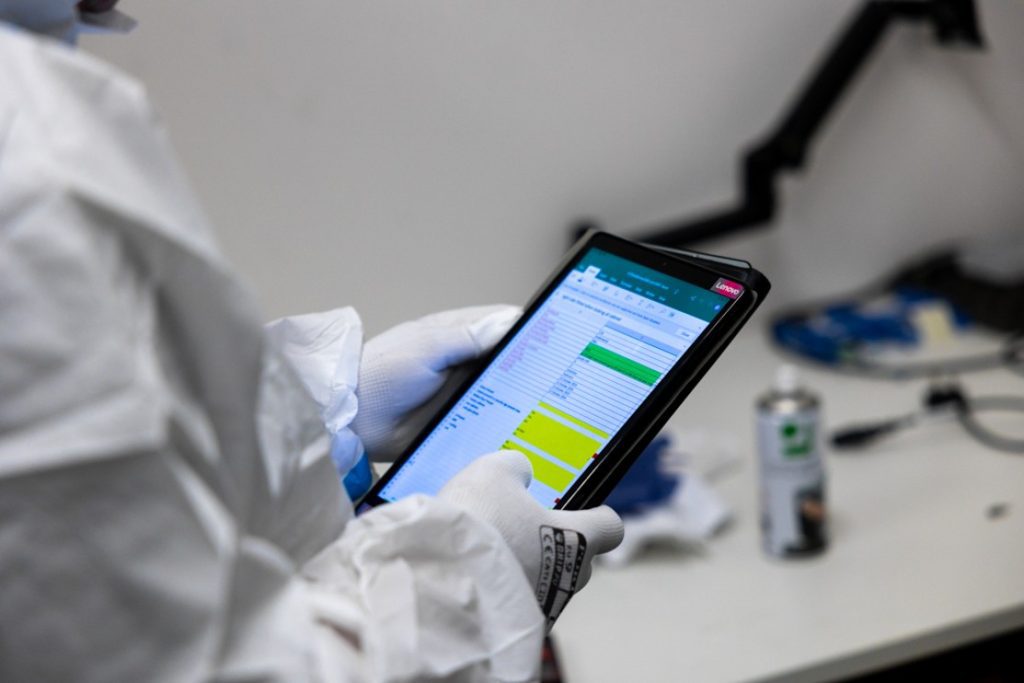
Data centre cleaning is more than a presentation task. In a live critical environment, dust and other particulates can collect on and around sensitive equipment, beneath raised floors, and within airflow routes. A structured cleaning programme gives facilities and IT teams a practical way to manage that build-up while taking account of site procedures, operational priorities and the need to avoid unnecessary disruption.
Particulate build-up can affect critical environments
Data halls and server rooms contain electronic equipment, cooling systems and airflow pathways that depend on a managed environment. The Delotas guidance notes that contamination can contribute to equipment failures, slowdowns and downtime, while particulate accumulation may obstruct cooling pathways and compromise airflow efficiency. Contamination control therefore belongs within a broader preventative-maintenance approach rather than being treated solely as a response to visible dirt.
Understand the role of ISO 14644-1
ISO 14644-1 is an internationally recognised standard that classifies air cleanliness in controlled environments according to airborne particulate concentration. It establishes measurable particle-concentration limits across ISO Classes, providing a framework for environmental monitoring, contamination-control strategies and structured cleaning regimes. For data centre and communications facilities, the principles help teams make cleanliness a measurable environmental consideration rather than a purely visual one.
Plan cleaning around the operational environment
A live facility requires a different approach from an empty or conventional workplace. Cleaning activities should be planned around access controls, risk assessments, method statements and the facility’s operational requirements. Delotas describes low-risk cleaning methodologies for live environments and a process designed to work safely and efficiently within strict site protocols. The objective is to carry out necessary work without creating avoidable disruption to critical operations.
Focus on airflow routes and hard-to-reach areas
A useful cleaning plan considers where particulate matter can collect and how it may interact with cooling and containment systems. This can include data halls, areas beneath raised floors, containment systems, air-handling components and the surrounding surfaces of IT equipment. Delotas identifies HVAC and air-handling cleaning, IT equipment cleaning and deep cleaning for data halls as part of its specialist data centre service scope. Reviewing these areas as part of a scheduled programme can help create a more complete contamination-control approach.
Use methods appropriate for sensitive equipment
The cleaning method matters in environments containing sensitive electronics. Delotas states that its procedures use HEPA-filtered vacuum systems, ESD-safe materials and contamination-controlled techniques. These types of controls are intended to reduce particulate accumulation while recognising the operational sensitivity of the environment. Site-specific procedures should always take account of the facility’s own equipment, restrictions and access requirements.
Set a cleaning schedule that reflects the site
Cleaning frequency should reflect the systems in place, the environmental standard being managed and changes to the site. Delotas notes ASHRAE guidance recommending data centres are cleaned at least annually, with more frequent cleaning potentially needed to support recommended particle levels. Its website also advises quarterly surface cleaning alongside an annual deep clean, and recommends a post-work deep clean after construction activity. A facilities team can use these considerations to build a schedule around operational conditions and audit expectations.
Include post-build and post-work cleaning in change planning
Construction, fit-out and other site works can introduce particulate contamination into an otherwise controlled environment. Planning pre- and post-build cleaning as part of project handover helps address this risk before equipment areas return to normal operation. Delotas provides pre- and post-build deep cleaning intended to support site commissioning and operational handover, alongside cleaning for established live environments.
Choose a provider that can work within your controls
When evaluating specialist cleaning support, facilities teams can consider whether the provider understands contamination control, live-site protocols and the standards relevant to the environment. Delotas provides nationwide data centre cleaning and works with facilities managers and data centre operators on cleaning schedules aligned with operational requirements and audit expectations. The company also states that its work is underpinned by ISO 9001 quality-management processes and industry accreditations including SafeContractor/CHAS, Constructionline and Cyber Essentials.